An increasing number of electric vehicle fans are converting their fossil-fuelled transport to electric.
More than 300 home-built EVs are around the country, the Australian Electric Vehicle Association (AEVA) says, with interest rapidly increasing.
But an engineering expert warns there are significant safety risks in fitting EV batteries into cars and it should be attempted only by people with appropriate expertise, ABC News reports.
North Queensland teacher Trevor Richards converted his 2000 model Toyota Hilux to run on electricity in 2007, using it as his primary car since.
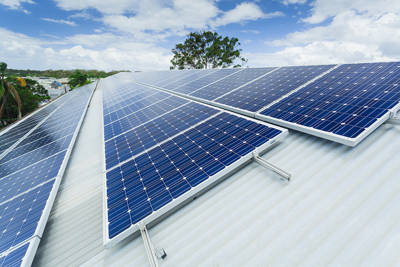
The car is charged for free at home using off-grid solar, or at free electric charging stations along the Queensland coast.
He spent about $35,000 converting the Hilux to electric, but says the amount he’s saved on fuel means the car has “well and truly paid for itself”.
He says the battery pack was the most expensive item at about $23,000 but will provide more than a decade’s use at about five cents per kilometre.
AEVA Queensland branch chairman Graeme Manietta has noticed a surge in interest from people investigating how to home-build their own EVs.
He says the main reasons include less costs than buying one and having something unique such as a converted classic car.
“If you really want an electric car and you can’t afford $50,000-$240,000 for some of the cars, this would be a good alternative as you’d probably spend somewhere around $16,000-$25,000 and you’d have a pretty decent electric vehicle,” he told ABC News.
Manietta, who runs a mechanical workshop, has home-converted two of his own family cars to electric and charges them using solar power at his home and business.
He says the process is becoming much easier.
Jake Whitehead from the University of Queensland School of Engineering says risks are involved with retrofitting any vehicle.
“The added risk with electric vehicles is obviously they have a battery which has quite a high current and voltage which has the potential to seriously injure or potentially kill you,” he says.
“You’ve got to be aware of the risks involved and that there is a cost.
“I don’t think this is something that anyone can do and I don’t think economically or financially it will stack up just for the average person to go and do.”