This story first appeared in the January issue of EVtalk – CLICK HERE to download the magazine FREE
 This year the world’s carmakers have big plans to bring all-new electric models to market, some in Australia and plenty overseas.
Four fully-electric cars arrived on the Australian market in 2018 in the form of Hyundai Ioniq, Renault Zoe, Jaguar’s I-Pace and BMW i3s, as well as hybrid models from Toyota, Mercedes, Mitsubishi and Volvo.
So here they are, the high-voltage vehicles teased, promised and a potential possibility of a definite maybe to hit the roads.
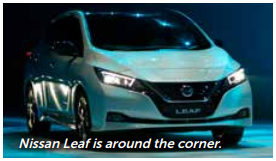
Nissan Leaf
Nissan Australia unveiled and teased the hell out of the coming-to-a-dealer-near-you Leaf in Q3 last year, with no pricing or a confirmed date – but Osher Gunsberg loves it.
We know it’ll come with a thereabouts range of 270km, will be Type 2 charger compatible and will be available in stock from all 89 Nissan dealers, whom will sell from “mid-2019”.
 Only the upper echelon of motoring media have driven it – and Osher Gunsberg of course – and we expect a sub-50K price tag to compete with the Hyundai Ioniq.
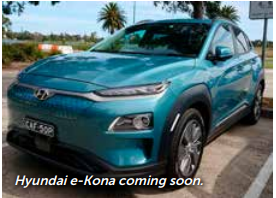
Hyundai Kona Electric
We know the Kiwis already have it, as do the electric-loving Norwegians; and having ridden in one over the Auto Media Group Christmas break, the 400km-plus “e-Kona”, could be a red hot seller.
It’s got all the silky power delivery and comfort of an EV, in the small SUV architecture which is already one of the most popular categories on the market.
If the federal and state governments need any more convincing that electric vehicles are here, and they need infrastructure, the Kona and its band of dancing car wash flappers need to do donuts and break-dancing on top of parliament house.
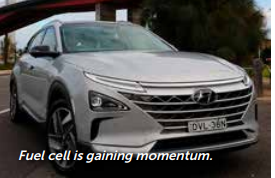
Hyundai Nexo fuel cell
The ACT government should be taking delivery of the first mass-produced fuel cell vehicle in Australia this year, as part of its windfarm project, and there is growing interest in the infrastructure potential of hydrogen refuelling.
The Nexo offers well over 600km of range and will be the cure to irrational range anxiety for those still timid of battery EVs and, providing the National Hydrogen Strategy comes to fruition, could see Hyundai the industry leader in actually putting their money and models where their PR mouth is.
If it’s good enough for chief scientist Dr Andrew Finkel to say hydrogen, our next “multibillion dollar export”, with “appropriate safeguards, is just as safe as natural gas, and just as convenient for consumers”, then you can bet carmakers will follow the breadcrumbs.
Kia Niro
With DNA from the Kona/Ioniq, Niro will use the same 64kWh battery pack with roughly 500km of range will be the second pure-electric vehicle for the Korean brand after the overseas-only Soul EV.
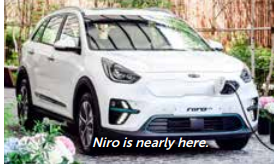 Niro hybrid and EV are already on sale in the States and South Korea, and was designed in alt-fuel loving California.
Niro EV is expected to arrive in Australia at the end of the year with something like a $60,000 price tag.
Best of all, however, the Niro EV – common sense would surmise – should be offered with Kia’s rockstar seven-year warranty.
Being able to come to a complete stop using just one pedal will be a certain party piece.
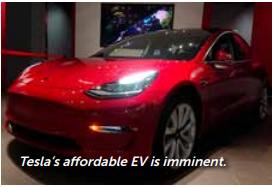 Tesla Model 3
The company may have had setback after production delay over controversy following the financial report, but in 2019 the Model 3 – Tesla’s full-blown everyman’s electric passenger car – will arrive for its patient, passionate owners to finally take home.
Those teasing buggers at Tesla Australia previewed three left-hook Model 3s in Melbourne, Sydney and Brisbane in August last year for reservation holders to get their first glimpse of, and this year their resolve will be rewarded.
We still don’t officially know what owners are paying for a Model 3, but for the majority, It’s only a number.
It has only been driven by the company’s local senior marketing manager, Heath Walker and a few select lucky few in the media.
But the proof will be when owners finally get behind the wheel.
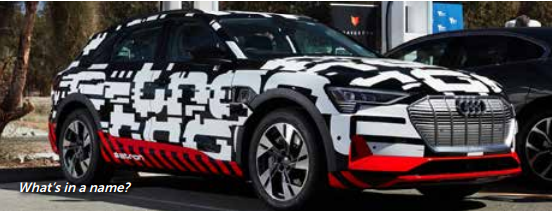
Audi e-Tron
An Audi Quattro with electric-vehicle torque in a five-seat SUV configuration and a range of up to 400km.
That’s one helluva a recipe.
Getting one’s hands on an e-Tron is expected to set Aussies back about $125,000, and that’s probably before options.
Europe and the US will get their orders first, no doubt, although you won’t be doing that through a typical Audi dealer, instead having to wait after ordering online.
But the biggest story here isn’t the wonky sales strategy that alludes to a mid-2019 Aussie arrival, or the 95kWh battery pack, the 30-minute 80% recharge time, nor those ultra-modern design cues.
Translating its name from French is the awkward bit owners will never forget.
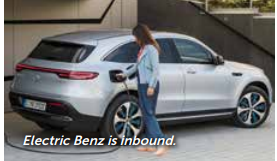 Mercedes-Benz EQC
Built in Alabama so that Trumpy can’t wreak havoc on taxing Mercedes-Benz’s first proper EV, the EQC will be on sale in Europe in a matter of weeks.
Weirdly enough, the US market will have to wait another six months, or even as long as 2020 before they see the three-pointed star plugging into the wall box or fast-charger on a Californian streetscape somewhere.
As for us, Mercedes-Benz Australia Pacific says EQC, of which the EQ part stands for “electric intelligence”, “will be launched in the SUV segment soon in Australia”.
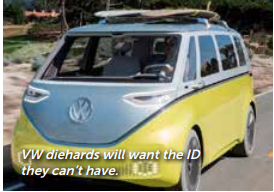 Volkswagen ID
Rising from the Dieselgate ashes, VW is a sure thing to come back bigger, better and with even more potential to be the world’s top auto brand once again.
And it starts with EVs.
Except the Golf-based ID electric hatch will apparently only be available in Europe.
It will, however, apparently, be the first of something like 27 new EV models to come to fruition for the German auto giant.
Those European IDs will begin pre-orders in March.
Surely one of those future 27 models will come to Australia.
Right, Volkswagen?
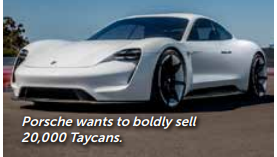 Porsche Taycan
Finally declaring the Tesla Model S would have a market rival, it was (arguably) always going to be Porsche that put the American electric sports car in its fadenkreuze – German for “crosshairs”.
Once again, it’ll be everyone else that gets the questionably-named Taycan before Down Under.
The question is how long Australia will have to wait for it in right-hand drive.
Don’t expect one before Christmas.
Porsche says it’s their most important car of 2019 as the brand celebrates 70 years.
“More than half of the people that are signing up for the Taycan have not owned or do not own a Porsche,” says Porsche North American president Klaus Zellmer.
Says a lot.