The Roy Morgan State of the Nation report has crunched the numbers and policies of respective parties ahead of the 2019 federal election and says it’s going to be tight.
Speaking to media and vested parties at Roy Morgan’s State of the Nation announcement in Melbourne, chief executive Michele Levine says this will be one of the closest election results in Australia’s history, with trust the bedrock for voting decisions.
Levine says the political upheaval of the last 12 years has built up to a point which she expects will see swing votes playing crucial roles in determining who holds onto or earns the right to govern.
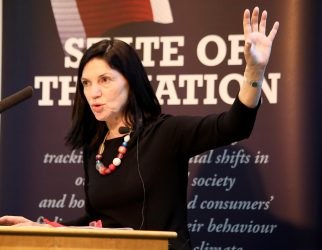
Michele Levine, Roy Morgan chief executive. Image: Roy Morgan.
She says to win, the Morrison government needs to hold into seven marginal seats in Queensland of 3.5% or less, all four or five seats “under threat in Victoria”, the Wentworth seat scored by Independent Dr. Kerryn Phelps last year and the Labor-held Lindsay seat in Sydney, plus the Braddon seat in Tasmania, as well as gain the Herbert seat of Townsville, to gain a majority.
The Shorten opposition government, Levine explains, needs to win three or four marginal Liberal/National seats in Queensland, three or four Liberal seats in Victoria and hold onto marginal Labor seats in NSW.
“If the ALP can pick up a net of 8 seats it will win Government and the current Roy Morgan Poll shows this as the outcome,” she says.
“The line-ball Roy Morgan Polls along with several high-profile Independents and minor party candidates suggest we could end up with another hung Parliament – as we now have,” Levine explains.

The Roy Morgan report which uses thousands of in-person data collections, shows the ALP at 51% on a two-party preferred basis against the LNP’s 49% as of May 6.
But she assures that Labor won’t be loved by everybody.
“Labor is not the part most businesses see as a friend, with business confidence numbers quite low,” she says.
“Business Confidence has plunged in the last year in particular and is now significantly lower than three years ago at 102.9 – down 13.2pts from July 2016 (116.1),” Levine continues.
“This plunge has occurred over the last 12 months as a slowing housing market has combined with political and policy uncertainty caused by a series of important elections in Victoria, NSW and the upcoming Federal Election,” she says.
Melbourne is presenting itself as in strong support of The Greens, with the Liberal-held seat of Higgins in close contention (54-46 on a two-party preferred basis) between candidate Jason Ball and Liberal Kelly O’Dwyer who has held the seat for a decade.
“The Greens are polling exceptionally well (over 25%) in the inner Melbourne seats of Melbourne (already hold), Cooper (formerly Batman), Wills, Macnamara (formerly Melbourne Ports) and Higgins. The best chance for the Greens to pick up a seat are Macnamara or Wills from the ALP or Higgins from the Liberals,” Levine confirms.
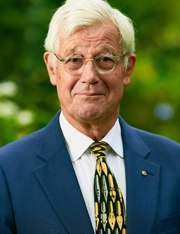
Julian Burnside, Greens candidate for Kooyong.
Treasurer Josh Frydenberg’s Kooyong seat in Melbourne is also under Greens/Labor threat, with an Environmental Research+Counsel poll suggesting human rights lawyer Julian Burnside QC withing “striking distance” at 48% to the former’s 51% two-candidate preference.
A local accountant tells The Financial Review he isn’t in favour of The Greens either, saying “It’s the doctors’ wives voting Greens while they drive their kids to school in SUVs saying ‘someone has got to do something about climate change'”. Another local says Frydenberg, aside from having campaign billboards defaced recently, isn’t exactly a hot favourite, as one voter says he “doesn’t trust the Liberals to be unified”.
Levine backs up suggestions that climate change is widely considered the biggest election issue.
“Greens supporters are unsurprisingly most concerned about ‘Global warming & Climate change’ – mentioned by a staggering 68% of Greens supporters nearly double any other issue,” she says.
“ALP supporters are the most likely to prioritise ‘Improving health services and hospitals’ (38% – second), and also give greater priority to ‘Global warming & Climate change’ (30% – third) and ‘Improving education’ (24% – fifth),” Levine reveals.

Josh FrydenbergImage: Twitter/ Josh Frydenberg
The turbulence of government in recent years – with six prime ministers since 2007 – has seen the rise of Independent and minor parties, all of whom are championing honest government.
“The rise of minor parties has been propelled by frustration and distrust with Government and politicians and it’s no surprise that ‘Open & Honest Government’ (35%) is easily the second most important issue for these supporters,” Levine attests.

Climate change is regarded as the hot-button issue.
But above all, Australians want cost-of-living pressure eased, reflected in Roy Morgan’s report.
“For over a decade now Australians have consistently stated that ‘Keeping day-to-day living costs down’ (53%) is the most important issue… well ahead of other important issues including ‘Improving health services & hospitals’ (32%), ‘Open & Honest Government’ (28%), ‘Global warming & Climate change’ (25%), ‘Reducing crime and maintaining law & order’ (21%), ‘Managing the economy’ (21%), ‘Improving education’ (20%),” Levine reveals.