This story first appeared in the June issue of AutoTalk – CLICK HERE to download the magazine FREE
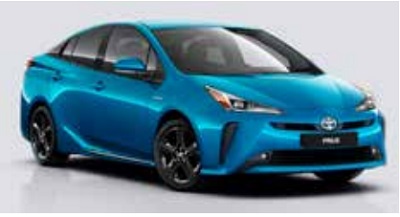
Toyota Prius hybrid
After years of dragging the chain on electric vehicle development, Japanese giant Toyota has finally woken and announced a goal of getting half its global sales from electric vehicles by 2025 – five years ahead of its previous schedule.
This is great news for Australia where Toyota has absolutely dominated car sales.
Not only will Toyota’s belated acceptance of pure electric vehicles boost EV sales here, but it will also put more pure EVs on to the right-hand-drive domestic Japanese market which will then, eventually, be available to Kiwi used import dealers.
The tragedy is that it has taken so long for the brand which gave us the Prius hybrid more than 20 years ago – thus ushering in an era of partially electric vehicles – to move on to all-electric vehicles.
Toyota is arguably the last major vehicle manufacturer in the world – Toyota along with EV committed Volkswagen lead the world in passenger vehicle production – to see the light and with Mazda, commit to pure EVs.
This is sad for a pioneer with its hybrid technology.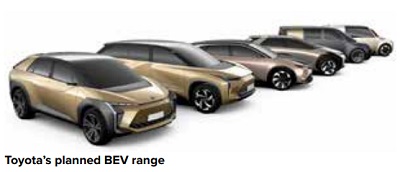
It also means that Toyota is now in a scramble playing catch up when it should have led the EV field.
Reuters says Toyota will now have to tap into Chinese battery makers to meet the accelerated global shift to electric-powered cars.
The change illustrates the breakneck growth in the EV market, which is transforming the auto industry, and is also an acknowledgment by Japan’s top car maker that it will not be able to meet demand for batteries on its own, adds Reuters.
Toyota is now faced with a higher-than-expected demand for cars that use batteries, rather than petrol, executive vice-president Shigeki Terashi says.
Also, increasingly stringent emissions regulations require more lithium-ion batteries in the next five years than the automaker had plans to produce, he adds.
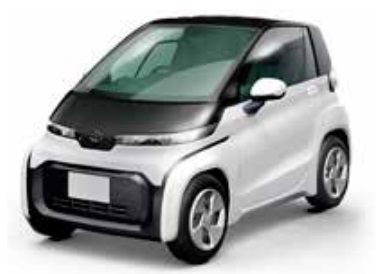
One of Toyota’s ultra-compact BEV models
“We consider ourselves as a maker of electric vehicle batteries, going back to when we developed the battery for the Prius,” he says, referring to the pioneering petrol hybrid.
“But there may be a gap between the amount of batteries we can produce, and the amount of batteries we may need.”
Reuters reports Toyota, which already makes batteries for hybrids and hybrid plug-ins, will partner with China’s Contemporary Amperex Technology Co Ltd (CATL) and EV-maker BYD Co Ltd for battery procurement.
The key to creating a profitable battery EV operation could be in combining new mobility technologies, including on-demand ride services, with battery-powered electric cars, Terashi says.
Tapping CATL signals a widening of Toyota’s procurement pool.
The Chinese firm already has relationships with other automakers such as Honda, Nissan and a multi-billion dollar battery supply deal Volvo Car Group, reports Reuters.
Toyota has for decades been developing its own lithium-ion EV battery technology and has partnered with Panasonic to develop and make rectangular-shaped prismatic batteries.
The automaker, which launched the Prius, the world’s first mass-market “green car” over two decades ago, has led in technologies for hybrid and fuel cell vehicles (FCVs).
Its cars account for more than 80% of the now diminishing global hybrid vehicle market.
But it has been left behind by rivals such as Nissan, Volkswagen and Tesla in bringing all-battery EVs to showrooms.
Toyota is now looking to partnerships with rival automakers and tech firms as it seeks to reduce its capital outlay for developing new-vehicle technologies.
Reuters reports Toyota announced it was teaming with Subaru Corp to develop a battery-electric SUV on a platform produced together as they seek to split costs.
Toyota also announced an ultra-compact two-seater designed for short trips – ideal for places such as Waiheke Island – with a maximum speed of 60km/h and 100km range on a single charge.