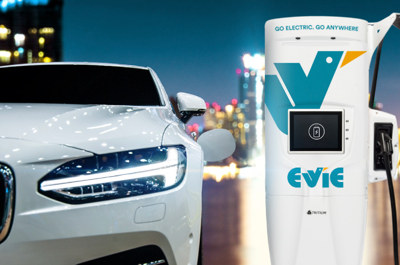
 Evie Networks will get $15 million funding to roll out the largest ultra-fast EV charging network along Australia’s highways.
The money will support the first phase of the $50.2 million intercity highway charging network with 350kW ultra-fast chargers along the ‘National Land Transport Network’ and beyond, says the Australian Renewable Energy Agency (ARENA) in announcing the funding.
A total 42 charging sites, all powered by renewable energy, will be installed at roadside service centres connecting Adelaide, Melbourne, Canberra, Sydney and Brisbane, plus destination charging in Far North Queensland, Tasmania and Perth.
Construction on the first site north of Brisbane is due to start on August 26, with 23 sites to be operational in the first year.
Each of the 42 sites will be able to charge two cars concurrently and will enable the typical EV available in Australia to charge to 100km within 15 minutes using Tritium chargers.
All sites will be open access with charging plugs suitable for all EV models available, including Tesla with an adaptor.
Spacing of sites is designed to align with Australian geography, population areas, highways and to be well within range of even the most affordable EV models, ARENA says.
Evie Networks’ charging network will further contribute to the infrastructure required to support the uptake of EVs in Australia, ARENA chief executive officer Darren Miller says.
“Evie’s fast charging stations across the country will help to increase the supply and adoption of electric vehicles by building the charging infrastructure in key areas along major roads. Reducing range anxiety will encourage EV uptake by giving motorists confidence they can get where they want to go – even on long road trips.”
Last year, ARENA also committed $6 million to Chargefox’s ultra-fast charging network which will include 21 charging sites from Adelaide to Brisbane, around Perth and in Tasmania.
“Both networks will provide complementary coverage along major highways connecting capital cities, and both will be powered solely with renewable energy,” Miller says.
ARENA and CEFC published a report last year predicting EV uptake would increase significantly in the next decade.
It adds EVs will reach price parity with petrol cars by the early to mid-2020s when looking at the upfront cost, and sooner than this on a total cost of ownership basis.
A lack of fast charging infrastructure was identified as a barrier to the uptake of EVs.
“EVs could play a huge role in the future, allowing renewables to power our cars. This could reduce fossil fuel consumption from transport and reduce the cost of car ownership,” Miller says.
Evie Networks chief executive officer Chris Mills says: “We have estimated that Australia needs around 350 sites to cover all the highways that make up Australia’s National Land Transportation Network. While many consumers will charge at home, they will also need plenty of fast chargers in towns, suburbs and cities. There are currently around 6500 petrol stations. This is just the beginning of the infrastructure build out.”