The Australian Automotive Dealer Association says 2019 will bring buyers better finance deals in the post-flex commission era.
The November ban on flex commissions, which saw Carsales’ take a $48 million impairment thanks to its half-share in Stratton Finance, could see a reversal of misfortunes.
The terms and conditions under which dealers sign customers to finance deals on new cars will be more transparent under the new rules, enforced by the Australian Securities and Investments Commission (ASIC).
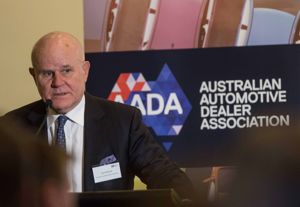
David Blackhall says AADA members can restore consumer trust with new finance conditions.
AADA chief executive David Blackhall told AutoTalk dealers are adapting if they haven’t already.
“Dealers were given more than a year’s notice by ASIC that flex commissions would be banned,” he says.
“The transition has been well and truly underway and dealers have been working closely with finance companies to adapt to this regulatory change,” Blackhall explains.
The AADA says the new finance conditions will be beneficial to both customer and dealer, and could see the more economically-minded consumers finding a renewed trust in dealer financiers.
“Under this new system the rate is now set by the lender [not the dealer], so consumers will benefit from greater transparency which will translate into a more trusting relationship between dealer and customer,” Blackhall reassures.
“Car buyers will have wider choice as a range of innovative and attractive finance products emerge, such as those offering a guaranteed future value at which the vehicle gets bought back at the end of the loan,” he suggests.
A more open structure for doing business will have positive changes for the industry, Blackhall says, which saw the market lose over 36,000 sales in 2018 over the 2017 calendar year.
“I believe enhanced transparency will translate into a better experience for consumers,” he adds.
“Combine that with dealers providing consumer solutions like the guaranteed future value products and I am confident more satisfied consumers will be signing more finance contracts in dealerships.”
The AADA is also watching and listening to the walls inside parliament house this year, with major changes expected with the potential change of government before the end of financial year.
A major development form the 2018-19 Mid-Year Economic and Fiscal Outlook includes a $1.4 million two-year contribution from 2018-19 to provide small business growth opportunities, namely, an Automotive Industry Code of Conduct to improve and balance in the new car retail supply chain, which the AADA says will be a benefit to “both small businesses and consumers”.
Luxury Car Tax revenue also took a dive with the slump in car sales last year, with financial year 2018-19 revised down from $740 million to $700 million to reflect the new car market droop.
Passenger vehicle tariff revenues have also been revised from $530 million to $450 million due to the soft market.