This story first appeared in the december issue of evtalkau CLICK HERE to download the magazine FREE
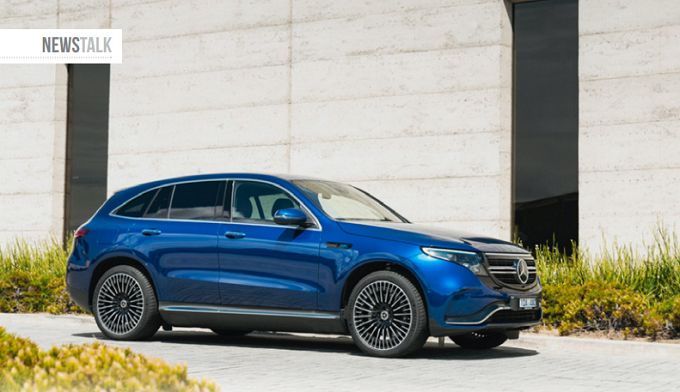
“To us, the EQC means the start of a new era,” Mercedes-Benz Australia/Pacific chief executive officer Horst von Sanden told EVtalk at the EQC’s launch event in Melbourne.
“The start of being in full electric vehicles in Australia for the first time is exciting because we have had quite some customer interest long before we actually launched,” he says.
“We are absolutely happy, it’s the start of something exciting and new for us.”
The customer interest von Sanden is talking about [in part] is the in-depth analysis they did on the 4000 potential customers that registered their interest in the EQC and, more specifically, those that went on to register to purchase.
“There are people that want a full-electric vehicle,” von Sanden says.
“Yes, of course hybrid is an alternative and we will continue to offer that, but there is a passionate group of people that want a full-electric car and they have shown enormous interest in this car and they have already ordered or bought them.”
The results Mercedes-Benz uncovered during its research proved to be very enlightening.
For example, the age range of those who had registered to purchase (and outlaid a sizable deposit) was between 18 and 86 with an almost an even split between 29-59 (29-38 19%, 39-48 23%, 49-58 26%, 59-68 17%).
And “technology & innovation” led the charge in “what’s important when purchasing an EQC” at 45%, sustainability second at 27%, driving experience 10% and trendsetting at 5%.
The question: “Where are you most likely to charge your EQC?” uncovered some other revelations.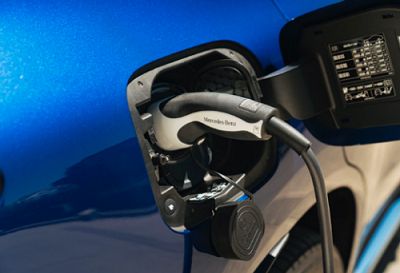
At home 70%, work and public charging 7%, and unsure 16%. For public charging in Australia, Mercedes-Benz has partnered with Chargefox, the largest ultra-rapid EV charging network in Australia.
A five-year Chargefox subscription is included as standard for EQC 400 4Matic customers offering free and unlimited charging at Chargefox ultra-rapid stations.
By the time EQC deliveries start, about 20 ultra-rapid charging stations will be available for travel between Adelaide, Melbourne, Sydney and Brisbane with additional stations in Western Australia and Tasmania.
“There is enough charging infrastructure in metropolitan areas, and if you have something at home then you get by,” von Sanden says.
“The whole point is how much do you actually drive, how much do you need to recharge. I think Australia is ready enough.”
According to the research on “how many km do you drive each day?” Mercedes-Benz found that 37% travelled less than 50km, 34% 51-100km,10% 101-150km and this progressively dropped with 3% claiming they travelled more than 400km.
We asked von Sanden about the delay in launching the EQC.
“Mercedes-Benz doesn’t want to be first at every cost,” he replies.
“We take the time to develop a product to a level that we are comfortable with launching it and from that perspective we are absolutely happy.
We are confident we are launching a fantastic vehicle, and if that is at the expense of a year or two so be it, we’re happy with that.”
What about the future for EQ? – the division of Mercedes-Benz that’s been established to guide the company’s transition to electric mobility.
“Electric does not stop with normal vehicles,” von Sanden says.
“There are seven vehicles in the pipeline for a period until 2023 and the models will be up and down from this one, into the higher and lower segments, including AMG,” he says.
Mercedes-Benz Australia/Pacific media relations and public relations head Jerry Stamoulis says there are three pathways of electrification.
“One is 48-volt mild-hybrid, there’s plug-in and full-electric. By 2023 everything will be electrified in some way.”
Will this mean a move away from diesel?
“When you look at GLC and below, yes it’s safe to say – but above that there’s still demand for a 700Nm GLE or GLS for towing or whatever you need this vehicle for.”
With the launch of the EQC in Australia, Mercedes-Benz has opted to handle the transactions at brand level rather than at dealerships.
We wondered what prompted this move?
”At the moment, the thought process [behind this move] is that we want to make the customer experience more pleasant,” von Sanden says.
“We want to make sure that the stock we have is available where it’s needed.
This is why we will basically use the dealer as an agent.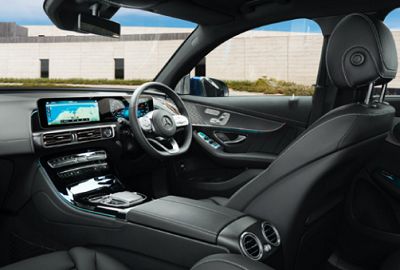
We need the dealer because we still believe that you have loyalty to a person or to a team, so we want the customer to have a loyal relationship to the retailer.
But we want to cut out the uncertainty or lack of transparency by introducing a set price and basically making all the cars that are in the country available to every customer.
“So it doesn’t matter if you go to your dealer today and your dealer has a certain stock level and he doesn’t happen to have the car you’re asking for, what could possibly happen is he tries to sell you something else from his stock.
“We are looking to make it simpler and smoother for the customer to get the EQC that they want, from the national stock.”
Is that only for the EQC?
“At the moment, yes,” von Sanden says.
“But it also gives us the opportunity to learn and look at whether this could be a model down the track beyond EQ.”
We asked if the New Zealand market experience had assisted in any way.
“New Zealand has developed a very strong market share, we are quite happy with our performance there,” von Sanden says.
“In terms of the EQC there’s obviously big interest.
I think New Zealand has always been ahead of Australia in terms of interest in electric vehicles.
It has more of a focus on environmental topics, so New Zealand is an important market for us, a different size of course, but we still learn from what happens in New Zealand,” he says.
“The EQC is a vehicle that we can proudly launch as a true Mercedes.
It ticks all the boxes.
It’s a new drivetrain, it’s fully electric but it’s also a full Mercedes,” von Sanden says.
“And this is why maybe it took a little bit longer to get it to this stage – but we’re very proud of it.
“Just to add to that, what makes it a real Mercedes is that you can drive any other Mercedes-Benz, jump into the EQC and you don’t have to change anything you do and that’s really important.
“So you don’t need to ‘relearn’ driving. You just jump into the EQC and drive.The only thing you’re missing is the engine noise and you get used to that pretty quickly.”
The Mercedes-Benz EQC 400 4MATIC is priced at $137,900 (MRLP). It is now on sale and available to view in EQ showrooms, with first customer deliveries beginning early 2020.
The Australasian launch event began at Mercedes-Me store/cafe in Melbourne, with an initial briefing that was succinct and to the point, an introduction to the salient points about the EQC 400, including design, powertrain and suspension – the front axle has steel springs and passive dampers with the electric motor positioned above hub, while the rear has air springs, passive dampers and the electric motor positioned below hub.
Although the EQC is based on the GLC platform, it shares just 15% of its components with the popular SUV, with much of that being steering and suspension.
The new EV SUV’s 4.88m wide and 1.62m high body has been designed to look modern and aerodynamic but it’s also not overtly futuristic.
Up front, the black panel grille bears the brand’s iconic three-pointed star below a softer more rounded bonnet.
It’s large multi-beam LED headlights are connected via a near full-width LED light bar, while to the lower corners, side air scoops channel airflow to the EQC’s specifically designed halo-ringed 20” alloys (or 21-inch option).
Aerodynamically, the EQC boasts a 0.28Cd drag coefficient that’s been optimised with regressive roof tilt towards the rear, a prominent roof spoiler for improved flow and a smooth underbody allowing for unhindered air flow.
At the rear, LED lighting and another LED full-width light bar grabs much of the attention, with the tailgate granting access to 500L of seat up luggage space.
The interior is unquestionably modern Mercedes-Benz but with subtle nods to its electrical evolution.
It has leather luxury and exposed stitching throughout, however, the air vents have a copper wire inspired insert design with circuit-board surrounds.
Dual 10.25-inch display screens that are touch, pad and voice controlled and come complete with the latest MBUX iteration.
Those that have been inside any current Mercedes-Benz vehicle will find it all instantly familiar, but one point of particular interest is the “range cloud” that overlays your vehicle’s range on to the EQC’s navigation screen as a cloud.
It’s real time, based on your current driving performance.
As expected, the EQC is a front runner in terms of safety and driver’s aids.
Attention assist, pre-safe plus, pre-safe sound, active parking assist, active blind spot assist, evasive and active steering assist, multibeam LED, active distance assist distronic, active brake assist – to name but a few.
Plus, in the new EQC 400’s five-star Australasian New Car Assessment Program (ANCAP) safety rating, it scored 96% for adult occupant protection and 92% for child occupant protection.
That represents the highest-ever adult occupant score for an electric car and the equal highest-ever child occupant score of any car.
Regenerative braking levels are managed or controlled via steering wheel paddles.
Upon start-up the EQC begins in drive with a more natural brake bias.
Paddle up to D+ and the EQC offers virtually zero motor braking, D- moderate braking and D – offers full regen.
This new Mercedes-Benz EV is powered by two 150kW electric motors generating a total of 300kW of power and 760Nm of torque.
Generally speaking, when you’re driving around town, the front motor is the one that’s engaged for everyday driving, but if you’re asking more of the car in dynamic, both motors are engaged.
It comes with an electric drivetrain, direct drive, fixed ratio transmission for each axle, that offers smooth and linear acceleration and improved efficiency – 0-100km/h is 5.1 seconds.
The 405-volt output, 80kWh (usable) lithium-ion 625kg battery forms part of the EQC’s floor, providing a low centre of gravity and comes with an eight-year/160,000km warranty, while a three-year, unlimited-kilometre vehicle warranty applies to all other items, with annual servicing intervals.
Energy consumption for the EQC is rated at 21.4kWh/100km.
With a full charge on board, the EQC can travel between top-ups for up to 434km (ADR) or 353km WLTP.
Charging 110kW DC/7.4kW AC.
Type 2 AC charging 4km/30minutes via a domestic socket, CCS DC 220km/30mins via ultra-rapid charge.