Australian households could save more than $20 billion ($2227 a household) from a transition to an electric vehicle (EV) fleet.
That’s according to Dr Jake Whitehead of the University of Queensland School of Civil Engineering in his submission to the Senate Select Committee on Electric Vehicles in Brisbane on September 27.
The committee, chaired by senator Tim Storer, held its fourth hearing after earlier visiting EV charger supplier Tritium.
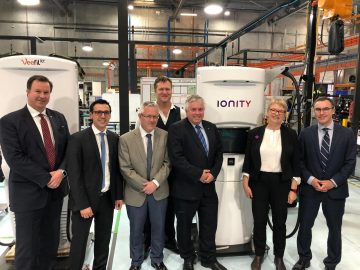
It heard from representatives of the Australian Electric Vehicle Association, Jet Charge and Chargefox, St Baker Energy Innovation Fund, Fast Cities Australia, the Australian Automotive Dealer Association, ACE-EV, and the Queensland Department of Transport and Main Roads – among others.
Whitehead says his savings estimate is based on spending of around $22b on transport fuel annually, and a further $13b on servicing and repairs.
Investment is needed in skills and service industries, particularly charging infrastructure, he says.
A vehicle-to-grid pilot in the second half of 2018 is planned by the university to explore how EVs can be used to support regional and remote communities during blackouts and natural disasters, such as providing back-up power.
The Queensland Government’s submission highlights how EVs will help to improve public health by reducing local air pollution. It’s estimated that vehicle pollution causes 1715 premature deaths in Australia annually, compared to around 1200 from crashes.
It also suggests EVs could help stabilise the electricity grid by storing excess power (including from solar systems) and exporting it back to the grid when needed.
Most of the submitters suggest Australia has the resources to benefit through the EV industry and that federal, state and territorial governments could work together to encourage it.
“Australia has all the raw resources for EV manufacturing,” ACE-EV Group says in its submission, typical of many.
It says EVs have a strong fuel-cost advantage over conventional internal combustion engine (ICE) vehicles and that Australia can become “a maker rather than a taker”.
A focus on benefits such as reduced transport costs, reduced pollution, increased energy security, virtual storage and new export opportunities is suggested.
“Business models based on boutique manufacturing indicate that ACE-EV Group as a start-up is forecast to have a value of $200 million within five years,” the submission says.
Criticism included lack of policy or positions at a federal level that would encourage an EV industry.
A grants process could stimulate EV growth, along with perks and incentives such as vehicle rebates, tax credits and waived or reduced registration fees for EVs, submitters suggested.
Establishing an EV policy working group is recommended too.
Improved charging infrastructure and access are advised, along with more consumer education.
AVEA suggests introducing strict emissions regulations on all new passenger vehicles, motorcycles and light trucks sold in Australia to avoid becoming a dumping group for inefficient ICE vehicles. It would also encourage low and zero emission vehicles.