 Aircraft firms are partnering to tackle greenhouse gas emissions, with electric one answer.
The world’s first commercial electric passenger aircraft has been launched at the Paris Airshow, June 17-23.
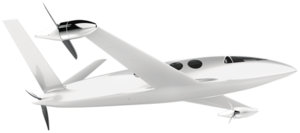
Dubbed ‘Alice’, the nine-seater electric plane from Eviation in Israel could be in service by 2022. It can fly 1040km at 3km altitude and do up to 440km/h.
The aircraft’s strange design is attributable to the lightweight motors and includes a flat lower fuselage to improve lift. There are three rear-facing pusher-propellers in the wingtips and tail.
“This plane looks like this not because we wanted to build a cool plane, but because it is electric,” says Eviation’s chief executive Omer Bar-Yohay, the BBC News reports.
“You build a craft around your propulsion system. Electric means we can have lightweight motors; it allows us to open up the design space.”
US regional airline Cape Air plans to buy a number of the aircraft.
Many other airlines and companies are looking into electric aerospace as well.
Airbus, Rolls-Royce and Siemens are co-operating on an electric-hybrid aeroplane, the E-Fan X schedule to be airborne in 2021.
Others are also working on hybrids and electrics.
EasyJet, for instance, is working with Wright Electric towards services by 2027.
Investment bank UBS forecasts a fast switch to hybrid and electric aircraft for regional travel, with an eventual demand for 550 hybrid airliners annually between 2028 and 2040.
Making long-haul flights electric may prove trickier.
Various agencies are noting aircraft carbon dioxide emissions, so the change to electric – especially for short-haul flights – is expected to happen quickly.