
When giants such as Google, Toyota and Nissan gather to consider something new it is time to pay attention.
This “next big thing” is energy independent electric vehicles (EIVs). Their impact on society and industry will, in due course, be seismic.
Meeting at the Technical University of Delft in the Netherlands, September 27-28, it is the world’s first event exclusively around EIVs.
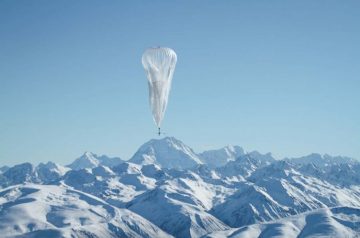 With more than half of the world’s population still without Internet access, Project Loon by X, founded by Google, is a network of balloons traveling on the edge of space, designed to extend Internet connectivity to people in rural and remote areas worldwide.
These balloons have solar powered steering and the result will be prosperity and education transformed.
Google says: “We aim to launch and maintain a fleet of balloons to provide Internet coverage to users on the ground, with our Autolaunchers capable of safely and consistently launching a new balloon every 30 minutes.
“We have flown over 19 million km of test flights to date since the project began – with one of our record-breaking balloons surviving for 190 days aloft in the stratosphere. High speed internet is transmitted up to the nearest balloon from our telecommunications partner on the ground, relayed across the balloon network, and then back down to users on the ground.
“We have demonstrated data transmission between balloons over 100 km apart in the stratosphere and back down to people on the ground, with connection speeds of up to 10 Mbps, directly to their LTE phones,” says Google.
Project Loon balloons are designed and manufactured at scale to survive the conditions in the stratosphere, where winds can blow over 100 km/hr and the thin atmosphere offers little protection from UV radiation and dramatic temperature swings which can reach as low as -90°C. Made from sheets of polyethylene, each tennis court sized balloon is built to last more than 100 days in the stratosphere before returning to the ground in a controlled descent.
Project Loon has taken the most essential components of a cell tower and redesigned them to be light enough and durable enough to be carried by a balloon 20 km up in the stratosphere. All the equipment is highly energy-efficient and is powered entirely by renewable energy – with solar panels powering daytime operations and charging a battery for use during the night.”
Raghu Das, CEO of IDTechEx – which is organising the event in Delft – says: “Google’s parent company has other energy independent vehicle technologies such as the energy positive tethered drones of Google Makani, making up to 600 kW of electricity from the stronger, more consistent winds at 200 metres or more.
“We have four companies presenting on their energy positive drones. The event covers all this and many other EIVs being trialled and even sold on the open market for land, water and air, bypassing electricity utilities and charging stations. Sometimes they need less battery or no battery.
“At lower levels, electric aircraft are tapping wind and sun as are planned cars, actual boats and more. Eventually the largest ships will become energy independent using tide, wave power, sun and wind in many ways to make their electricity and saving the emissions of millions of cars for each ship.
“The Delft event will show how it all adds up to an addressable market of hundreds of billions of dollars.”
Find out more at www.IDTechEx.com/delft17.

