Claire Painter is a smart young woman who has managed efforts to reduce emissions across Australia’s transport and energy sectors.
Now she has left the non-profit and academic world for luxury vehicle maker Mercedes-Benz, where she is playing a key part in the introduction of the auto maker’s all-electric EQ models to Australia.
The EQ models are touted to become 15-25% of Mercedes-Benz sales by 2025.
Charging up
Strangely, Painter does not see her academic and commercial roles as being all that different.
“When it comes to readying the market for electric mobility, the work being done in non-profit and academia is not separate from the commercial sector,” she tells EVtalk.
“The work that I did at ClimateWorks Australia very much made the business case for progressing electric vehicle uptake in Australia, and the need to work collaboratively with groups across all sectors including non-profit, government and the private sector.
“In fact, this made my transition to the new role at Mercedes-Benz Australia all the more smooth as I had pre-existing relationships with many stakeholders and industry leaders.
“The transition from the non-profit sector to the commercial world has provided an exciting opportunity for me to further develop theoretical concepts into on-the-ground, practical solutions which address barriers to electric mobility uptake in Australia and New Zealand.”
Painter explains that as the EQ infrastructure readiness manager at Mercedes-Benz Australia, she is contributing to an overarching strategy – for the Australian and New Zealand markets – including electric vehicle charging infrastructure and services.

Claire Painter
She explains that Daimler AG is investing 10 billion euros in expansion of its EQ portfolio, and more than one billion euros in global battery production.
“The name EQ stands for ’electric intelligence’, and is derived from the Mercedes-Benz brand values of ‘emotion’ and ‘intelligence’.
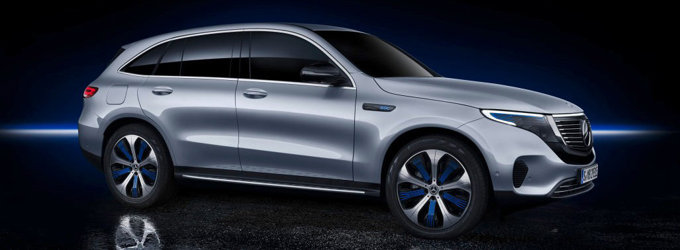
“The first fully electric vehicle from Mercedes-Benz will be an SUV called the EQC.
It is due to start production in 2019.
The vehicles are expected to arrive in Australia and New Zealand in the second half of the year.
“The first of a growing family of all-electric vehicles from Mercedes-Benz, the EQC all-wheel-drive SUV is expected to have around a 450km range, and a combined power consumption of 22.
2kWh/100km; with zero carbon dioxide emissions,” Painter says.
Two electric motors (front and rear axles) have a 300kW combined output and can get the vehicle to 100km/h in 5.
1 seconds, the top speed governed to 180km/h, she says.
Conceived to meet all the requirements for a battery-electric drive system, the EQC has five driving modes – Comfort, Eco, Max Range, Sport, and an individually adaptable programme.
In the more economical driving modes, such as Eco Assist, the haptic accelerator pedal prompts the driver to conserve power by advising when it is appropriate to come off the accelerator.
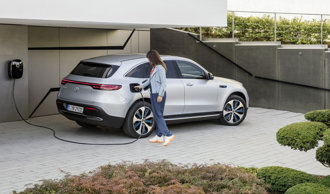
The battery pack – with an eight-year warranty or 160,000km – can be recharged to 80% in about 40 minutes using 110kW DC charging, or around 11 hours using a 7.
2kW home charger.
Type 2 CCS charging is used.
Prior to joining Mercedes-Benz Australia, Painter was an implementation manager at ClimateWorks Australia, where she managed efforts to reduce emissions across the transport and energy sectors.
“In the transport sector programme, I led projects which focused on best practice vehicle emissions standards, supporting the uptake of electric vehicles and net zero emissions strategies,” Painter says.
“I played a key role in the establishment of the Electric Vehicle Council in Australia,” she tells EVtalk.
Painter also authored the June 2018 second edition of the State of Electric Vehicles in Australia report.”
Painter worked as a senior associate for the Climate Policy Initiative.
In this role she project managed the Global Innovation Lab for Climate Finance, a global initiative that aimed to drive billions of dollars of private investment into climate change mitigation and adaptation in developing countries.
She is a Fellow for the MIT Center for Collective Intelligence Climate CoLab project and is on the advisory panel for the Climate Council’s Cities Power Partnership.