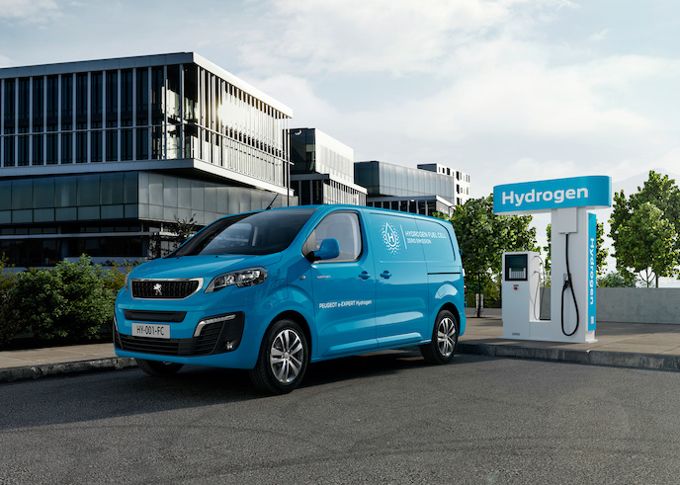
In addition to its combustion and battery electric models, Peugeot has unveiled a hydrogen fuel cell electric vehicle (FCEV) version of its light commercial Expert panel van.
The new Peugeot e-Expert Hydrogen will first be offered to professional customers in France and Germany, from the end of 2021.
It will be produced in Valenciennes, France and then transformed in the Stellantis competence centre dedicated to hydrogen technology in Rüsselsheim, Germany.
Peugeot Australia general manager Kate Gillis says the manufacturer has committed to offering an electrified variant across its entire model range by 2020.
She says the he reveal of the e-Expert Hydrogen shows Peugeot’s commitment to its ‘extended power of choice’ strategy.
“Locally, we’re beginning our electrification journey later this year with the introduction of the Peugeot 3008 Hybrid4 and 508 Fastback Plug-in Hybrid Electric vehicles.
“Moving into 2022, we will be introducing full battery electric vehicles to the Australian market.
“Whilst the e-Expert Hydrogen is not currently available or under consideration for Australia, electric variants of Peugeot’s light commercial vehicles are currently under consideration for local introduction,” Gillis says.
Peugeot e-Expert Hydrogen
The e-Expoert Hydrogen deployment follows the introduction of the battery-powered e-Expert in 2020, which was voted International Van of the Year in early 2021.
The new Peugeot e-Expert Hydrogen includes a new “mid-power plug-in hydrogen fuel cell electric” system, specific to Stellantis, made up of:
- A fuel cell which produces the electricity needed to drive the vehicle thanks to the hydrogen on board the tank; and
- A high-voltage lithium-ion rechargeable battery with a capacity of 10.5kWh that can be recharged from the electricity grid and which also powers the electric engine during certain driving phases.
The new Peugeot e-Expert Hydrogen has the ability to fill up with hydrogen in 3 minutes for a range of over 400km in the WLTP homologation cycle (currently undergoing approval).
It has a charging socket for the high-voltage battery, and two lengths are available (Standard and Long) with the same loading volume characteristics as the diesel and battery electric versions, offering up to 6.1m³ load volume, up to 1100kg payload, and up to 1000kg towing capacity.
It is designed around a “mid-power plug-in hydrogen fuel cell electric” solution, which combines the advantages of hydrogen, battery technology and electric traction.
The hydrogen in the tank powers the fuel cell, which produces the electricity needed to drive the vehicle over long distances, while the high-voltage battery provides, among other things, the power needed to ensure dynamic performance.
The entire system is integrated into the vehicle to ensure that no compromises have been made in terms of volume or payload says the manufacturer.