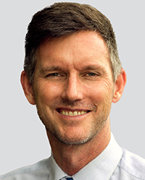
Mark Bailey
Queensland will soon welcome its first purpose-built automated vehicle.
This follows the signing of an international agreement that will ensure the state is prepared for the future.
Delivering the keynote address at the Australian Intelligent Transport Systems Summit in Sydney on August 28, transport and main roads minister Mark Bailey says on-road testing of the automated vehicle is an integral part of Queensland’s preparation for advanced vehicle technologies.
“Plans are underway to test vehicles with automated driving capabilities as part of the Department of Transport and Main Roads’ Cooperative and Highly Automated Driving (CHAD) pilot,” Bailey says.
“In early 2019, we will receive a Renault Zoe EV, a Society of Automotive Engineers Level 4 automated vehicle purpose built in France for our CHAD pilot.”
A Level 4 automated vehicle does not require the driver to take action when the system is driving, but allows them to take back control if needed.
A cooperative automated vehicle (CAV) can also connect with other vehicles, infrastructure and road operations systems to share safety-related messages and warnings.
Bailey says the Palaszczuk Government has partnered with the Queensland University of Technology (QUT) and iMOVE Cooperative Research Centre to explore the safety impacts of automated vehicles on our roads, and to allow road users to see and experience them.
“Through QUT’s partnership with Vedecom, a French collaborative research centre, we will test automated vehicle safety across five areas – roads, roadsides, vehicles, road users and speeds.
“This will be the fourth vehicle prototype built by Vedecom. It will be both cooperative and able to operate in autonomous mode under certain conditions.
“We’re doing this testing so we will be ready when vehicles with these capabilities are widely available for Queensland road users.
“Preparation is key. We must ensure our road network, infrastructure, legislation, regulation and licencing processes are aligned to support to integrate automated vehicles with our transport network.”
Bailey says that, for Queenslanders, these rapidly developing vehicle technologies have the potential to significantly reduce crashes and crash-related gridlock, as well as reducing emissions and fuel use.
iMOVE Australia managing director Ian Christensen says urgent improvements to transport systems are needed to reduce congestion, accidents and emissions.
“We are keen to prepare for the safe introduction of CAVs into our networks.”
QUT professor Andry Rakotonirainy says the project will enable QUT to develop new methods of testing the validity of automated vehicles, and to help ensure their safe interaction with other road users and road infrastructure.
The CHAD pilot is part of the larger Cooperative and Automated Vehicle Initiative (CAVI) being delivered by TMR.
The CAVI project will also include Australia’s largest trial of Cooperative Intelligent Transport Systems technologies, as well as an investigation into options for using emerging technologies to benefit pedestrians, cyclists and motorcycle riders.
It is co-funded by the Motor Accident Insurance Commission.