This story first appeared in the June issue of AutoTalk – CLICK HERE to download the magazine FREE
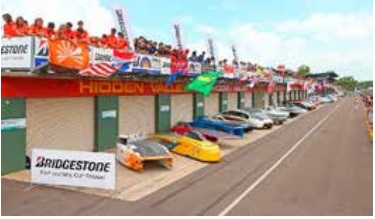
The start of the last Bridgestone World Solar Challenge in 2017 at Darwin’s Hidden Valley Raceway
A total 53 teams from 24 countries comprises the largest line-up yet for the 2019 Bridgestone World Solar Challenge across Australia on October 13-20.
Bridgestone welcomes the announcement from the solar car race organisers as a demonstration of the increasing relevance of the event and its relation to the future of the automotive industry.
Interest in the challenge highlights the worldwide pursuit for sustainable mobility, the company says.
Entrants design, build and develop solar powered cars to traverse 3000km from Darwin in the Northern Territory to Adelaide in South Australia.
Headlining the record entry list are 30 Challenger Class entries, which will compete for outright honours.
A 23-strong contingent is in the Cruiser Class, a category which challenges teams to deliver a practical, marketable solar electric car judged on design appeal as well as energy consumption.
Bridgestone has been the title sponsor of the event and has continuously supplied teams with specially developed solar car tyres since 2013.
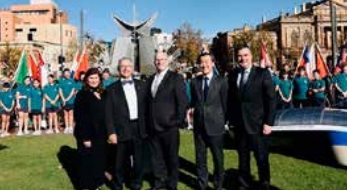
At the launch of the 2019 event are, from left, South Australia events executive director Hitaf Rasheed, Chris Selwood, David Ridgeway, Kazutoshi Oyama and Stephen Roche
Through its involvement in the event, Bridgestone aims to help foster the development of sustainable mobility while supporting the ambitions of young engineers.
The announcement of the record entries, held at the finish line of the event, Adelaide’s Victoria Square, was attended by Bridgestone brand strategy and communications division director Kazutoshi Oyama, Bridgestone Australia and New Zealand managing director Stephen Roche, South Australia trade, tourism and investment minister David Ridgeway, and Bridgestone World Solar Challenge event director Chris Selwood.
“Bridgestone is committed to the Bridgestone World Solar Challenge on a global level because we share the same values as the event,” Roche says.
“We are delighted that this year’s Bridgestone World Solar Challenge boasts the largest field ever, and we are encouraged to see so many students sharing our passion for the pursuit of sustainable mobility.”
Roche explains that through sponsorship of the World Solar Challenge, Bridgestone Corporation develops new technologies for customers around the world.
“Our low-rolling resistance, fuel efficient Ecopia tyres are an example of innovation and technology linked directly to the event.”
The rise of hybrid technology and the growing popularity of electric vehicles around the world means developments from the Bridgestone World Solar Challenge are proving to be increasingly relevant for the future of automotive design.
“The point of this challenge has always been to realise a more sustainable way to travel and we are now so much closer to the reality of sustainable, energy positive, solar electric cars,” Selwood says.
“BWSC solar cars are no longer the realm of fantastic, imaginary vehicles dreamed up by enthusiasts and niche inventors.
The research and development being tested in this event now makes its way into mainstream commercialisation, such as Bridgestone,” he says.
“With the Paris Agreement deadlines, European bans and phasing out of petrol and diesel cars becoming a reality, the BWSC is globally significant.”