Australia’s rooftop solar boom has thrown up some curve balls.
Several agencies have waded in to the discussion, with the Australian Competition and Consumer Commission (ACCC) report Restoring electricity affordability and Australia’s competitive advantage calling for wide-ranging reforms.
It’s critical of network companies, generators and retailers, but has targeted rooftop solar for drastic action.
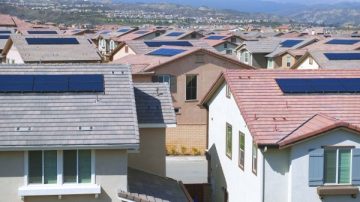 The ACCC has called for the federal small-scale renewable energy scheme (SRES), which provides an upfront rebate, to be wound down and “abolished” by 2021. The scheme is already decreasing annually from 2016/17 until phasing out in 2030, but the ACCC wants it accelerated as it considers the SRES unfair to non-solar customers, RenewEconomy reports.
The rebate applies to installations of 100kW or less.
A record 1.5gW in rooftop solar is expected to be installed this year and reach 58gW by 2050, tipped to also help with electric vehicle uptake.
Nowhere in the 369-page report does the ACCC calculate the benefit of rooftop solar, despite most networks recognising it has reduced, delayed and narrowed the most costly part of the electricity market, the afternoon demand peak, RenewEconomy says.
The ACCC says a big drop in solar PV installation costs has made the case for a subsidy for small-scale solar installations weak.
The move could make it harder for lower income and other households which previously had difficulty finding the money for rooftop solar, just as new programs are introduced making it easier for them to use the technology, RenewEconomy adds.
The Australian Energy Market Operator says Australia can expect a grid that sources nearly half of its supply from distributed energy – including battery storage.
The ACCC notes its proposal may result in a significant downturn in solar installations, but it says that ending the scheme in 2021 could still give people time to install.
The Smart Energy Council is astounded.
“The one thing householders can do to slash their power bills is to install solar,” council chief executive officer John Grimes say.
“The federal government needs to immediately rule out abolishing the SRES. Uncertainty around the SRES will cause unnecessary panic and confusion for consumers and the industry.”
Meanwhile, the Consumer Action Law Centre (Consumer Action) says while the report aims at “misleading and confusing marketing practices that have led to Australian households paying record high prices for electricity”, it’s unhappy with some other aspects.
That includes a call for Victoria to join the National Energy Customer Framework (NECF), which Consumer Action says would be a mistake if it meant taking Victorian consumer protections backwards.
Meanwhile, Victorian network customers have responded scathingly to a survey on rooftop solar, particularly where they export to the grid. Asked if solar households should pay for power quality investment to avoid a decline in overall power quality, an online forum response was highly critical, many predicting repercussions.
“If you start charging me more, simple – I will just disconnect and install batteries,” one says.