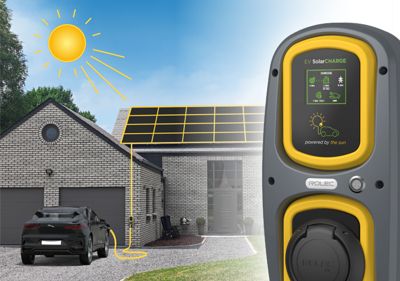
YHI’s EV Solar Charge.
Australia could capitalise on its exceptional solar resources to power and promote EVs.
And it could save people big dollars in the process, says a report Steering by the Southern Sun – Australians Are Missing a Trick on Solar-Powered Electric Vehicles released by the Institute for Energy Economics and Financial Analysis (IEEFA).
The report finds enormous potential for the rapid adoption of EVs in Australia, highlighting one fifth of households have already installed rooftop solar to reduce overly high electricity bills.
“We are seeing rapid change in Australia with people totally on board in adopting new energy technologies,” IEEFA analyst Gerard Wynn says.
“Australia is leading the world in rooftop solar market share, and people are looking around for the next carbon-free innovation.
“The beauty of electric vehicles is they can be charged by a household’s rooftop solar plus battery, with savings generated by on-site power generation and from avoiding the cost of constantly fuelling a conventional car.”
Rooftop solar in Australia is already achieving payback periods of five years or less, with consumers then benefiting from 20 to 25 years of free electricity, but the report found Australia is lagging behind other developed countries in building an EV market.
“At the moment, the combination of an electric vehicle with rooftop solar plus battery has a payback period of nine years, falling to four years in 2025, and less than two years in 2030,” says Wynn.
“With the right government incentives, this payback period can fall to about five years today and be zero by 2030.
“In a market where electric vehicles and batteries are made more affordable, transport and fuel costs are also reduced for people across Australia.”
Wynn says EVs will become increasingly attractive to Australian consumers as a result.
Australia registered just 1800 EV sales in 2018, a tiny 0.21% share of national sales.
That number trails far behind other countries similar in economic size or region, such as Korea (29,630 new EV sales last year), the Netherlands (25,070), Canada (22,660), and New Zealand (4360).
The report also looks at other countries such as Germany and Norway for examples of lessons that could be applied to Australia.
Norway achieved rapid EV growth through incentives including removing GST and import tariffs on EVs, exemptions on road tolls, exemptions from motor vehicle taxes, free public parking, and consumer capital starter-packs of up to A$6500.
“When the government introduces the right mix of incentives, people in Australia will benefit from cheap, solar-powered charging for their vehicles sooner,” Wynn says.