
Australia’s real-world emissions are trending upward and show no signs of slowing down, a University of Technology Sydney report shows.
Adjunct professor Robin Smit’s report Real-World CO2 Emissions Performance of the Australian New Passenger Vehicle Fleet 2008-2018 finds the 19.5 million cars on our roads are emitting record levels of cancer-causing carcinogens, carbon dioxide, and fine soot particles.
Smit’s 24-page report which draws on data and analysis from the EPA, ClimateWorks, the Bureau of Infrastructure, University of Queensland, the Australian Greenhouse Emissions Information System, the statistics bureau, the National Transport Commission and many more, says Australia nationally remains hands-off in its approach to plugging tailpipe emissions.

Robin Smit, University of Technology Sydney
“Australia does not have mandatory fuel efficiency and/or CO2 vehicle emission standards, which are internationally recognised as a key and fundamental policy measure to reduce GHG emissions,” Smit writes in the introduction.
“The majority of state and territory governments across Australia have either announced or are developing zero emission and/or electric vehicle policy frameworks,” he acknowledges.
“There are, however, no coordinated national policy measures in place in Australia that specifically mitigate CO2 emissions – or rather greenhouse gas (GHG) emissions from road transport,” Smit explains.
The professor says available evidence shows CO2 dominates the greenhouse emissions from Australia’s road transport, with an estimated 74.8 million tonnes of ‘carbon dioxide equivalent’ or CO2-e emissions into the atmosphere per year. These emissions continue to increase every year due in part to Australia’s national fleet distance-travelled average rising from 142 billion kilometres in 2000, to 176 billion kilometres in 2016.
This is despite the introduction of Euro 5 emissions standards and the widespread adoption of fuel-saving engines and transmission technology from vehicle manufacturers, such as direct-injection, continuously variable transmissions (CVT), variable valve timing, turbocharging, and stop-start engine shutdown and cylinder deactivation features on many models.
“There is a general expectation and acceptance that mean CO2 emission rates of the Australian new passenger vehicle (PV) fleet will autonomously reduce over time, due to technological improvements enforced by overseas vehicle emissions legislation,” Smit reports.
Tare weight and gross vehicle weight have consistently increased 2009-2018.
“This assumption is likely incorrect and that CO2 emissions performance of new passenger vehicles has, in fact, stabilised, and increased in recent years. This creates a significant policy issue,” he explains.
Prime Minister Scott Morrison’s Coalition government has been under scrutiny in recent weeks as Australia’s bushfire season has started early, ravaging Queensland, New South Wales and now Victoria, which experts have attributed as partly blamed on climate change as the country suffers prolonged and serious drought and harsh dry conditions that have made bushfire threat hard to ignore.
Diesel passenger vehicle sales have increased dramatically in the last 10 years as well, which is another factor blamed for Australia’s emissions increase.
Diesel PV sales made up 12% in 2008, increasing to 19% in 2012 and remaining “more or less stable” from 2013-2018, fluctuating between 17-18%, the report notes.
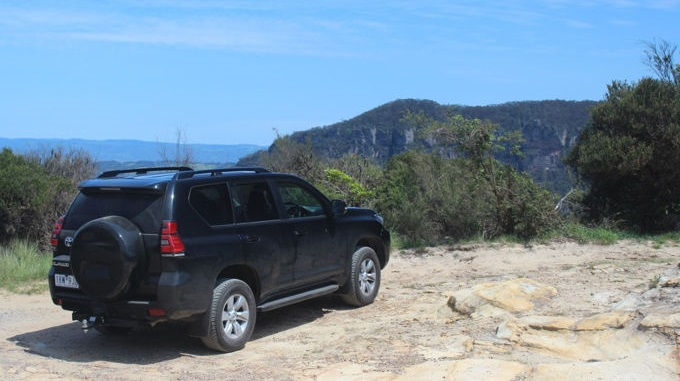
However those diesel vehicles, including medium and large SUVs, duel-cab utes and people movers, “are, on average about 40% heavier than petrol PVs”.
Other diesel vehicle design parameters also adversely affect CO2 emission rates, the report shows, such as having a higher proportion of 4WD vehicles, with 15% higher engine capacity and a lower proportion of CVT transmissions.
“A climate friendly and low greenhouse gas emission image is incorrect for Australian diesel cars,” the report says.
Smit’s report suggests using fleet average data to track emissions, which shows Australia’s average fleet emissions as trending downward from 2006-205 before plateauing in 2016 is inaccurate when compared to real-world data from the NTC which shows CO2 has increased since 2014, and from the Transport Energy/Emission Research organisation which shows CO2 in 2018 surpassed levels recorded in 2008.
The report also finds that engine downsizing from 2008-2018 has seen mean engine capacity and number of cylinders in vehicles purchased has reduced 13% and 8% respectively, showing a trend to reduce the engine size of the passenger fleet.
Performance of those engines has also increased slightly overall by 3% in that 10-year period, however weight has dramatically increased, nulifying those increases in efficiency and output.
“Both tare weight and gross vehicle weight have consistently increased over the period 2009-2018,” the report says.
Tare weight has risen by 15%, gross vehicle mass (the maximum legal mass a vehicle is allowed to weigh) has grown by 17%, which ” is well known to strongly affect fuel use and CO2 emission rates, as heavier vehicles require more energy to move,” the report states.
“Vehicle manufacturers have not applied changes in vehicle specifications in a way that would have consistently improved fuel efficiency and reduced CO2 emissions,” the report explains.
“This is likely caused – to some extent – by a lack of nationally coordinated policy measures and incentives in Australia, such as mandatory GHG emission or fuel efficiency standards for new motor vehicles”.
Total real-world CO2 emissions from passenger vehicles are estimated to have increased roughly 10% in the period 2008-2018, from about 37 million tonnes in 2008 to 40 million tonnes in 2018.

