 Australia could have 100% renewable electricity by the early 2030s.
That’s if the present rate of installations by industry continues into 2020 and beyond, a study by the Australian National University (ANU) shows.
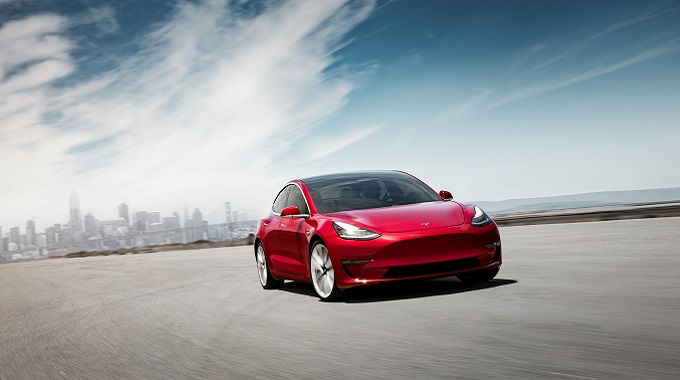
It would help improve electric vehicle (EV) uptake too.
ANU experts analysed Australian Government renewable energy project data that showed during 2018 and 2019 Australia will install about 10,400mW of new renewable energy.
If the current rate of renewable energy installations continues, Australia will eclipse the Renewable Energy Target, with 29% renewable electricity in 2020, and 50% in 2025, Energy Change Institute director professor Ken Baldwin says.
“We estimate electricity emissions would thereby be reduced by 26% in 2021, and the electricity sector on its own would meet Australia’s entire Paris emissions reductions target of 26% by 2025,” he says.
“Australian industry is proving it’s not difficult or expensive to make deep and rapid cuts to greenhouse gas emissions.”
Baldwin says the evidence points to Australia’s capacity to be a renewable energy superpower, with all the economic and environmental benefits that come with it.
“We need Australia’s governments to put in place the right plans for the renewable energy train to have a smooth ride,” he says.
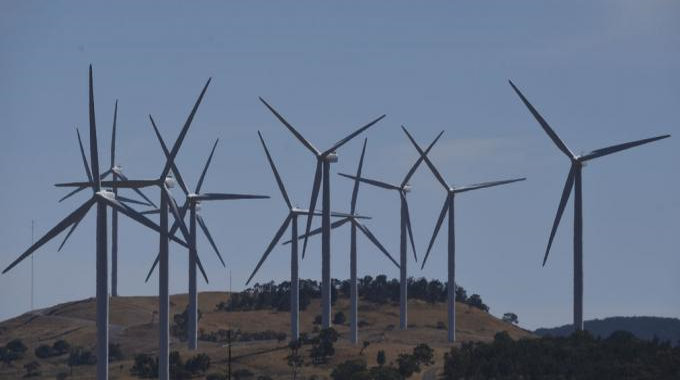
Professor Andrew Blakers from ANU Research School of Engineering says the new capacity coming is divided about equally between large-scale solar photovoltaics (PV), wind farms, and rooftop solar PV.
“Combined, the 10,400mW of new capacity to be installed in 2018 and 2019 represents about 30% of Australia’s peak electricity demand,” he says.
“The Australian renewable energy industry is unequivocally demonstrating that it has the technical capability to deliver vast quantities of cheap, reliable, secure and zero-emissions energy.”
Blakers says Australia is installing wind and solar PV at a faster per capita rate than nearly every other country.”
Dr Matthew Stocks from the ANU Research School of Engineering says the rapidly growing supply of renewable energy into the electricity network requires effective planning to ensure enough storage and transmission capacity is built to deliver reliable energy to homes and businesses.
“The remaining piece of the puzzle is more storage and stronger interstate interconnection, which is where governments should be focussing their attention,” he says.
“Pumped hydro storage – such as the proposed Snowy 2.0 – is off-the-shelf technology, while batteries are rapidly falling in price.”
The ANU analysis was based on publicly available data from the Clean Energy Regulator, and is available on the ECI publications website.